
Second-largest Whitsunday island with pristine reefs, ancient Ngaro rock art, and secluded camping
Location:
Off central Queensland coast
Part of:
Whitsunday Islands National Park
Coordinates:
-20.1167, 148.9167
Access:
Day tours, overnight sailing, private boat
Best for:
Snorkelling, diving, camping, cultural sites
Island size:
58 square kilometres
About Hook Island
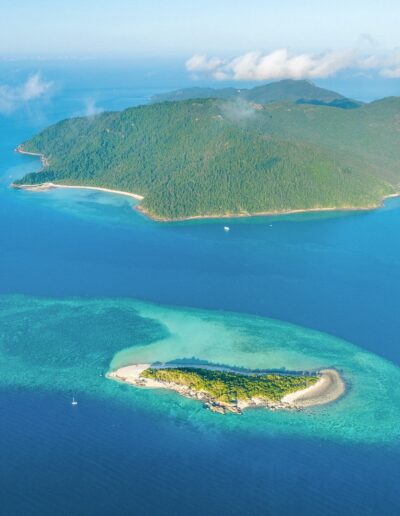
Hook Island is a continental island located in the Whitsunday Islands group off the central Queensland coast. At 58 square kilometres, Hook Island is the second-largest island in the Whitsundays after Whitsunday Island, and sits approximately 25 kilometres east of Airlie Beach. The island is almost entirely contained within Whitsunday Islands National Park and Great Barrier Reef World Heritage Area, remaining largely uninhabited with no permanent resort development.
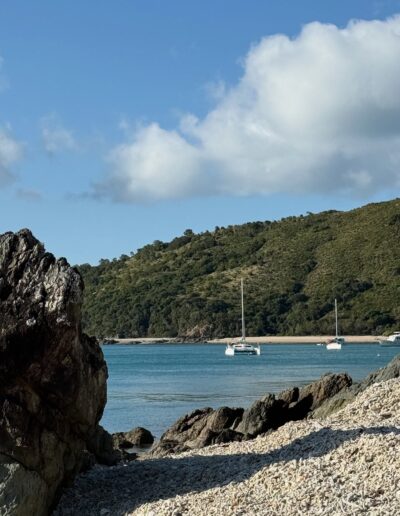
Hook Island is home to the Ngaro Cultural Site at Nara Inlet, one of the oldest Indigenous sites on Australia's east coast with rock art dating back approximately 9,000 years. The traditional owners, the Ngaro people, were a seafaring Aboriginal group who inhabited the Whitsunday Islands for thousands of years before European colonisation. The island features two dramatic fjord-like inlets on its southern side - Nara Inlet and Macona Inlet - which provide sheltered anchorages popular with the Whitsunday sailing fleet.
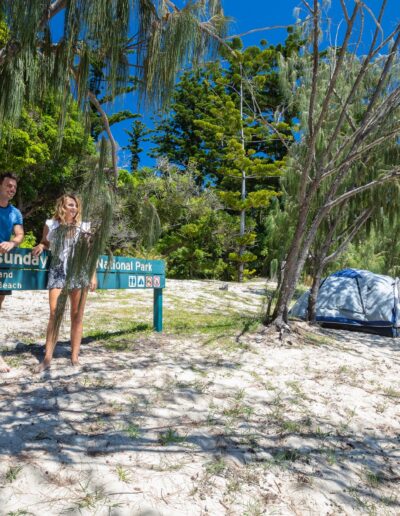
The island rises to 450 metres at Hook Peak and features rugged terrain covered with dense rainforest. Hook Island's northern coast is renowned for exceptional snorkelling and diving at sites including Manta Ray Bay, Butterfly Bay, The Pinnacles, and Maureen's Cove. Four designated camping areas around the island - Maureen's Cove, Steen's Beach, Curlew Beach, and Crayfish Beach - offer secluded bush camping experiences with basic facilities. The island's fringing coral reefs support abundant marine life including sea turtles, tropical fish, manta rays, dolphins, and seasonal humpback whales.
What to Expect at Hook Island
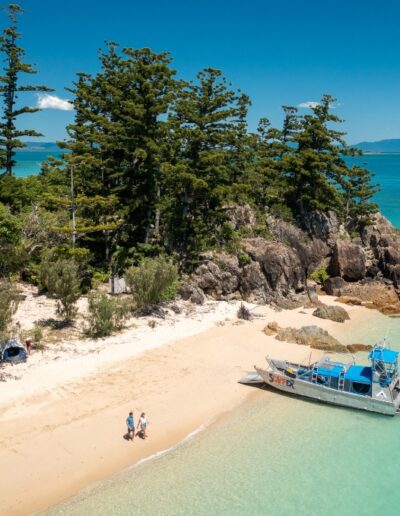
Hook Island offers a wild, undeveloped island experience with pristine natural environments and minimal facilities. The island remains almost completely free of commercial development, with only a former wilderness resort site (closed since 2013) at the northern tip. Visitors encounter dense tropical rainforest, secluded beaches, dramatic coastal cliffs, and crystal-clear waters surrounding the island's extensive coastline.
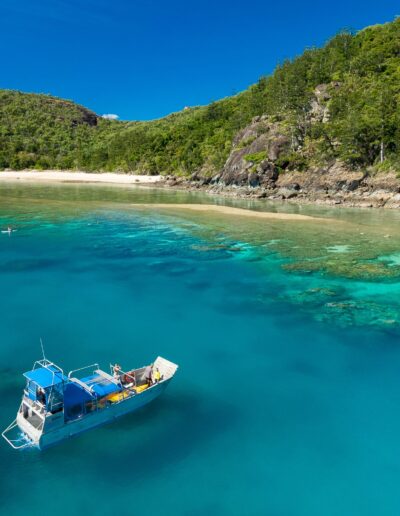
The northern coast provides some of the Whitsundays' best snorkelling conditions, with visibility varying by season and weather. Fringing coral reefs display vibrant coral formations, and diverse marine life thrives in the warm waters. Manta Ray Bay and Butterfly Bay attract day tour vessels and bareboat charters, while The Pinnacles diving site features large coral bommies rising from deeper water. The island's sheltered bays offer protection from wind and swell, creating ideal conditions for swimming, kayaking, and stand-up paddleboarding.
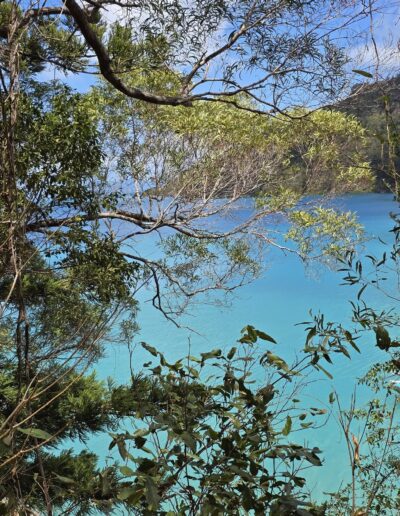
Nara Inlet provides one of the Whitsundays' most protected anchorages, with deep blue waters surrounded by rainforest-covered slopes. The inlet features a freshwater rock pool and seasonal waterfall at its head, accessible by dinghy. The Ngaro Cultural Site walking track leads from the beach through lush vegetation to ancient cave paintings, with interpretive displays and audio stories from Ngaro elders. Wildlife sightings include sea eagles, kites, ospreys, butterflies (especially in winter), and occasionally wild goats - descendants of animals introduced by early European explorers.
How to Get to Hook Island
Tours
Hook Island is accessible on various day tours departing from Airlie Beach that include snorkelling stops at the island's northern bays. Snorkelling tours regularly visit Manta Ray Bay, Butterfly Bay, and other prime reef locations around Hook Island. Overnight sailing tours allow extended exploration of the island's inlets, camping areas, and cultural sites.
Bareboat Charter & Private Vessels
Bareboat charter and private boat owners access Hook Island from Shute Harbour, Coral Sea Marina, or Port of Airlie. The island offers numerous protected anchorages including Nara Inlet, Macona Inlet, Stonehaven Bay, Manta Ray Bay, and Butterfly Bay. Public moorings are available at several locations on a first-come basis, with anchoring permitted in designated areas.
Camping Transfers
Dedicated camping transfer services operate scheduled boat transport from Airlie Beach to Hook Island's four camping areas. Return transfers cost approximately $160 per person, with minimum passenger requirements for more remote locations like Maureen's Cove and Steen's Beach. Services include water containers for filling before departure. Camping permits must be obtained separately from Queensland Parks before arrival, and all camping equipment, food, and supplies must be brought to the island.
Things to Do at Hook Island
🤿 Snorkelling & Diving
Explore fringing reefs at Manta Ray Bay, Butterfly Bay, The Pinnacles, and Maureen's Cove. Spot tropical fish, sea turtles, rays, and diverse coral formations.
🏛️ Ngaro Cultural Site
Visit ancient rock art at Nara Inlet, one of Australia's oldest Indigenous sites. Walk the 20-minute track with interpretive displays and audio stories from Ngaro elders.
🏕️ Bush Camping
Camp at four secluded sites - Maureen's Cove, Steen's Beach, Curlew Beach, or Crayfish Beach. Experience true island wilderness with basic facilities.
⛵ Sailing & Kayaking
Anchor in protected inlets, sail between secluded bays, or kayak along the coastline exploring Nara Inlet, Macona Inlet, and numerous hidden coves.
🏊 Swimming
Swim in sheltered bays with calm, clear waters. Access secluded beaches including Stonehaven Bay, Butterfly Bay, and beaches at camping areas.
🥾 Bushwalking
Hike to Hook Peak (450m), walk the Ngaro Cultural Site track, or explore trails connecting camping areas through rainforest and coastal vegetation.
📸 Photography
Capture dramatic fjord-like inlets, pristine beaches, ancient rock art, vibrant coral reefs, and spectacular sunsets over the Whitsunday Passage.
🐢 Wildlife Watching
Spot sea turtles, manta rays, dolphins, reef sharks, sea eagles, ospreys, butterflies, and during winter (June-September) migrating humpback whales.
Nearby Islands & Attractions
🏝️ Whitsunday Island
Largest Whitsunday island located south of Hook Island. Home to Whitehaven Beach and Hill Inlet Lookout, with six camping areas.
🏝️ Hayman Island
Luxury resort island located west of Hook Island. Private five-star accommodation, Blue Pearl Bay snorkelling, accessible by ferry or private vessel.
🏖️ Whitehaven Beach
World-famous 7km beach on Whitsunday Island's eastern coast. Pure white silica sand, accessible on day tours from Airlie Beach.
⛵ Airlie Beach
Mainland gateway to the Whitsundays located 25km west of Hook Island. Marinas, tour departures, accommodation, restaurants, and lagoon swimming.
Essential Information
Best Time to Visit
Hook Island is accessible year-round, with dry season (April-October) offering optimal conditions for camping, snorkelling, and diving. Winter months (June-September) provide excellent visibility for underwater activities, comfortable temperatures for bushwalking, and opportunities to see migrating humpback whales in the Whitsunday Passage. Butterfly Bay experiences peak butterfly activity during winter months. Summer (November-May) brings higher temperatures, afternoon storms, and marine stinger season requiring protective clothing for swimming.
What to Bring
For day trips: snorkelling gear, swimming attire, sun protection (hat, sunscreen, rashie), reef-safe sunscreen, underwater camera, water, and snacks. For camping: all drinking water (5 litres per person per day recommended), complete food supplies for entire stay, camping equipment, cooking gear, torch, first aid kit, insect repellent, rubbish bags, and marine stinger suit for summer. Sturdy hiking shoes recommended for Ngaro Cultural Site track and bushwalking trails.
Important Notes
- No shops, cafes, or facilities on Hook Island - bring all supplies
- Camping permits required from Queensland Parks - book in advance
- Former resort site is closed - visitors restricted to beach at high water mark
- Marine stinger season November-May requires protective clothing
- Mobile phone coverage extremely limited or unavailable
- Do not touch or damage Ngaro rock art - stay outside cave shelter
- Take all rubbish - no bins available (pack in, pack out)
- Public moorings operate first-come, first-served basis
- Watch for wild goats on island - descendants of historical stock
- Strong currents at some locations - check conditions before swimming
- Hammerhead sharks use Nara Inlet as nursery - observe from distance
Frequently Asked Questions
What is Hook Island known for?
Hook Island is known for the Ngaro Cultural Site featuring 9,000-year-old Aboriginal rock art, exceptional snorkelling and diving at sites like Manta Ray Bay and The Pinnacles, dramatic fjord-like inlets (Nara and Macona), and secluded bush camping in pristine national park wilderness.
How do you get to Hook Island?
Hook Island is accessible only by boat from Airlie Beach. Day tours include snorkelling stops at the island's northern bays, overnight sailing tours allow extended exploration, bareboat charters and private vessels can anchor in numerous protected bays, and dedicated camping transfer services operate to the four camping areas.
Can you camp on Hook Island?
Yes, camping is permitted at four designated campgrounds on Hook Island - Maureen's Cove, Steen's Beach, Curlew Beach, and Crayfish Beach. Camping permits must be booked in advance through Queensland Parks, and all water, food, and equipment must be brought to the island. Basic facilities include composting toilets and picnic tables.
What is the Ngaro Cultural Site?
The Ngaro Cultural Site is located at Nara Inlet on Hook Island and features ancient Aboriginal rock art created by the Ngaro people approximately 9,000 years ago. It is one of the oldest Indigenous sites on Australia's east coast. A 20-minute walking track leads to the cave viewing platform with interpretive displays and audio stories from Ngaro elders.
What are the best snorkelling spots on Hook Island?
The best snorkelling locations on Hook Island include Manta Ray Bay and Butterfly Bay (northern coast), The Pinnacles and The Woodpile (featuring large coral bommies), Maureen's Cove, Luncheon Bay, and Blue Pearl Bay. Visibility varies with weather conditions and tides. Low tide often provides the best snorkelling conditions.
How big is Hook Island?
Hook Island covers 58 square kilometres, making it the second-largest island in the Whitsunday Islands group after Whitsunday Island. The island is approximately 11 kilometres long and 5 kilometres wide, with its highest point being Hook Peak at 450 metres elevation.
Tours to Hook Island
Explore Hook Island on snorkelling day tours, overnight sailing adventures, or multi-day camping expeditions. Most tours depart from Airlie Beach and include stops at the island's pristine reefs, secluded bays, and cultural sites.
Good to Know
✓ Second-largest island in the Whitsundays (58 sq km)
✓ Home to 9,000-year-old Ngaro rock art
✓ Part of Whitsunday Islands National Park
✓ Almost entirely uninhabited wilderness
✓ Four designated camping areas with permits
✓ Renowned for exceptional snorkelling and diving
✓ Dramatic fjord-like inlets on southern coast
✓ Traditional land of the Ngaro people
Type: Continental Island
Location: 25km east of Airlie Beach, Whitsundays, Queensland
Best For: Snorkelling, diving, camping, Aboriginal cultural sites