
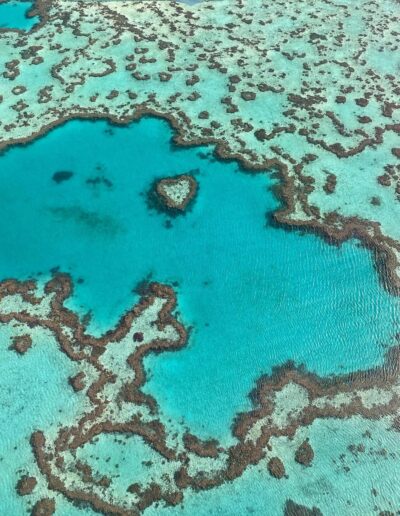
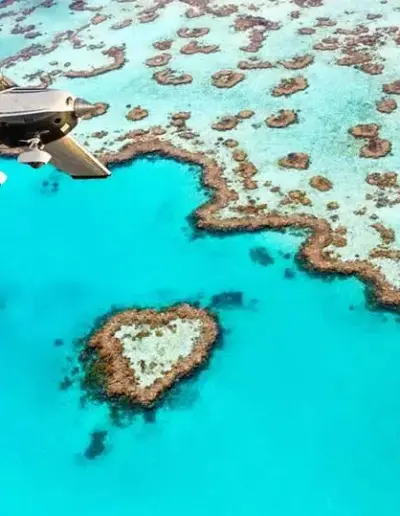
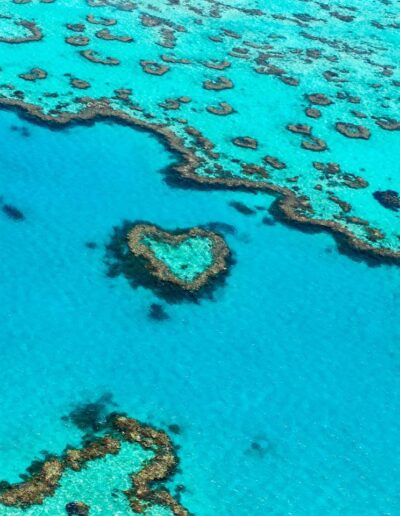
Naturally heart-shaped coral formation in the Great Barrier Reef, best viewed from the air
Location:
78km from Airlie Beach
Part of:
Hardy Reef, Great Barrier Reef Marine Park
Size:
17 metres in diameter
Access:
Scenic flights only (protected zone)
Best for:
Aerial photography, proposals, scenic viewing
Discovered:
1975 by pilot John Ramsden
About Heart Reef
Heart Reef is a naturally heart-shaped coral formation located in Hardy Reef lagoon, approximately 78 kilometres from Airlie Beach in the Great Barrier Reef Marine Park. This iconic coral composition measures 17 metres in diameter and sits within the protected waters of one of the world's most significant marine ecosystems, creating a perfect natural symbol of the beauty and wonder of the Great Barrier Reef.
The reef was discovered in 1975 by John Ramsden, a pilot with Air Whitsunday, during a routine scenic flight over Hardy Reef. Flying over the lagoon, he spotted the distinctive heart-shaped coral structure below - a formation created naturally over hundreds of years through the gradual build-up of coral. The symmetry and shape of Heart Reef is both rare and visually captivating, making it one of Australia's most photographed natural landmarks and a defining symbol of the Whitsundays region.
Heart Reef holds protected status within the Great Barrier Reef Marine Park and sits in a highly restricted zone where marine vessels cannot enter. This protection ensures the reef remains pristine and untouched for future generations. The only way to experience Heart Reef is from the air via helicopter, seaplane, or fixed-wing aircraft on scenic flights departing from Airlie Beach, Whitsunday Coast Airport, and Hamilton Island. The aerial perspective reveals the reef's vivid turquoise waters, intricate coral patterns, and perfect heart shape against the deep blue backdrop of the Coral Sea.
What to Expect at Heart Reef
Viewing Heart Reef from the air provides a spectacular perspective on one of nature's most remarkable formations. The heart-shaped coral sits within Hardy Reef lagoon, surrounded by vibrant turquoise shallow waters that contrast sharply with the deep blue channels of the outer reef. The coral formation's symmetry is striking - photographers often note that their own images look as professional as commercial brochures, with the reef's natural colours requiring little editing or enhancement.
Scenic flights typically approach Heart Reef after passing over other sections of Hardy Reef, including Bait Reef and neighbouring reef formations. Pilots usually provide a countdown before reaching Heart Reef, giving passengers time to ready their cameras. The flight path circles the reef multiple times, ensuring every passenger - all with window seats - gets optimal views and photo opportunities from different angles. The surrounding Hardy Reef lagoon stretches for 13 kilometres, showcasing the vast scale of the Great Barrier Reef system.
The best viewing conditions occur during mid-level tides around late morning (approximately 11am), when water clarity is excellent and the contrast between coral formations and surrounding water is most pronounced. Low tide can expose coral above the surface, while high tide may obscure visibility through deeper water. Weather conditions play a significant role - clear, calm days provide the sharpest views and best photography opportunities. Heart Reef has become one of the most popular locations for aerial marriage proposals, with pilots accommodating romantic gestures through extended flight time over the iconic formation.
How to Get to Heart Reef
Scenic Flights from Airlie Beach
The most popular and accessible way to see Heart Reef is through scenic flights departing from Whitsunday Airport, located five minutes from Airlie Beach. Fixed-wing aircraft flights typically last 60-70 minutes and accommodate up to five passengers, flying over the Whitsunday Islands, Whitehaven Beach, Hill Inlet, and Hardy Reef before circling Heart Reef. These flights depart multiple times daily and represent the most affordable aerial option.
Helicopter Tours
Helicopter tours provide a more intimate and flexible viewing experience, with flights departing from Airlie Beach and Hamilton Island. Helicopters fly at lower altitudes than fixed-wing aircraft, offering closer views of the reef formations. Some helicopter packages combine Heart Reef viewing with stops at Whitehaven Beach or landings at exclusive reef pontoons. Premium helicopter experiences departing from Hamilton Island include ultra-exclusive tours with air-conditioned pontoon access and glass-bottom boat rides around Hardy Reef.
Seaplane Flights
Seaplane tours offer a unique perspective, combining water landings with aerial viewing. These flights can land on the water near outer reef locations, providing opportunities to snorkel at Hardy Reef before flying over Heart Reef. Seaplane pilots typically count down before reaching Heart Reef, allowing passengers time to compose their photographs.
Combination Tours
Several operators offer "sea and sky" combination packages that pair Whitehaven Beach tours or Great Barrier Reef tours with scenic flights over Heart Reef. These full-day experiences allow you to snorkel, swim, and explore reef locations accessible by boat, then view Heart Reef from above during the flight component. Some day tours include reef pontoon visits with optional 10-minute helicopter flights to Heart Reef departing directly from the pontoon.
What You Can Do at Heart Reef
📸 Aerial Photography
Capture one of the world's most photographed natural landmarks. Every passenger gets a window seat with multiple viewing angles as the aircraft circles the reef.
💍 Marriage Proposals
Heart Reef is one of Australia's most romantic proposal locations. Pilots can arrange extended flight time and special moments over the iconic heart-shaped formation.
🌊 Reef Observation
View the intricate coral patterns, turquoise lagoons, and deep blue channels of Hardy Reef from above, witnessing the vast scale of the Great Barrier Reef ecosystem.
✈️ Scenic Flight Experience
Flights to Heart Reef pass over the Whitsunday Islands, Whitehaven Beach, and Hill Inlet, providing comprehensive aerial views of the region's most spectacular locations.
Nearby Attractions
🪸 Hardy Reef
Heart Reef sits within Hardy Reef lagoon, a 13-kilometre reef system featuring world-class snorkelling and diving sites, plus the Reefworld pontoon with underwater accommodation.
🏖️ Whitehaven Beach
Seven kilometres of pure white silica sand on Whitsunday Island. Most scenic flights to Heart Reef include aerial views of Whitehaven Beach and Hill Inlet's swirling sands.
🌏 Great Barrier Reef
Heart Reef is part of this UNESCO World Heritage Site, the world's largest coral reef system visible from space, home to thousands of marine species and protected ecosystems.
Essential Information
Best Time to Visit
Heart Reef can be viewed year-round, though the reef is only clearly visible during certain tidal conditions. Mid-level tides around late morning (11am) provide optimal viewing, when water clarity is excellent and coral patterns are most defined. The dry season (April to November) offers the most reliable weather for scenic flights, with clearer skies and calmer conditions. Heart Reef is best viewed on calm, clear days when visibility is excellent. Flights operate daily subject to weather conditions, with some operators adjusting departure times based on tides and light conditions.
What to Bring
For scenic flights: camera or smartphone with fully charged battery, polarising filter or sunglasses to reduce glare, light jacket (aircraft can be cool), confirmation details and identification. Photography tips: use cloudy white balance mode to enhance reef colours, shoot through clean windows without touching glass, and take multiple shots at different zoom levels as the aircraft circles. Window seats are guaranteed on all flights, with passengers on both sides getting excellent views as pilots circle the reef.
Important Notes
- Heart Reef is completely protected - swimming, snorkelling, diving, and boat access are prohibited
- The only way to experience Heart Reef is from the air via scenic flights
- All flights are subject to weather conditions and may be rescheduled for safety
- Weight restrictions apply to all aircraft - check with operators when booking
- Scenic flights depart from Airlie Beach, Whitsunday Coast Airport, and Hamilton Island
- Book scenic flights in advance during peak season (April-October)
- Inform pilots if planning a marriage proposal for extended viewing time
- Tidal timing affects visibility - operators schedule flights for optimal conditions
Frequently Asked Questions
Where is Heart Reef located?
Heart Reef is located in Hardy Reef lagoon, approximately 78 kilometres from Airlie Beach in the Great Barrier Reef Marine Park. The reef sits within the protected Whitsundays section of the outer Great Barrier Reef.
Can you swim or snorkel at Heart Reef?
No, Heart Reef is completely protected and sits in a highly restricted zone within the Great Barrier Reef Marine Park. Swimming, snorkelling, diving, and boat access are prohibited to preserve the reef's pristine condition. The only way to experience Heart Reef is from the air.
How do you visit Heart Reef?
Heart Reef is best viewed on scenic flights by helicopter, seaplane, or fixed-wing aircraft departing from Airlie Beach, Whitsunday Coast Airport, or Hamilton Island. Most flights last 60-70 minutes and include views of Whitehaven Beach, Hill Inlet, and the Whitsunday Islands.
How big is Heart Reef?
Heart Reef is approximately 17 metres in diameter. Despite its relatively small size, the reef's distinctive heart shape and vibrant colours make it clearly visible from scenic flights and easily photographed from aircraft windows.
When was Heart Reef discovered?
Heart Reef was discovered in 1975 by John Ramsden, a pilot with Air Whitsunday, during a routine scenic flight over Hardy Reef. The naturally heart-shaped coral formation has since become one of Australia's most iconic natural landmarks and a symbol of the Whitsundays region.
What is the best time to see Heart Reef?
Heart Reef is best viewed during mid-level tides around late morning (approximately 11am) when water clarity is optimal and coral patterns are most visible. The dry season (April-November) offers the most reliable weather conditions for scenic flights with clear skies and good visibility.
Scenic Flights to Heart Reef
Heart Reef is only accessible via scenic flights departing from Airlie Beach and Hamilton Island. Most flights include views of Whitehaven Beach, Hill Inlet, and the Whitsunday Islands, providing a comprehensive aerial tour of the region's most spectacular locations.
Good to Know
✓ Naturally heart-shaped coral formation
✓ Located in Hardy Reef lagoon, Great Barrier Reef
✓ 17 metres in diameter, 78km from Airlie Beach
✓ Discovered in 1975 by pilot John Ramsden
✓ Only accessible via scenic flights (protected zone)
✓ One of Australia's most photographed reefs
✓ Popular location for aerial marriage proposals
✓ Best viewed mid-level tide around 11am
Type: Natural Coral Reef Formation
Location: Hardy Reef, Great Barrier Reef Marine Park, 78km from Airlie Beach
Best For: Scenic flights, aerial photography, marriage proposals